Abstract
Non-invasive ventilation (NIV) supports breathing without endotracheal intubation, lowering the risk of airway injury, sedation-related instability, hospital-acquired infections, and ventilator-associated complications. Growth in publications accelerated during and after the coronavirus disease-2019 (COVID-19) pandemic, yet regional representation of evidence remains uneven. Bibliometric synthesis is useful to clarify research structure, influence, collaboration intensity, and unmet scientific priorities in pediatric NIV. To analyze global publication trends, thematic clusters, and research-collaboration networks in pediatric NIV literature from 2013 to 2023. A systematic search of Scopus metadata was performed on July 23, 2024, using TITLE-ABS-KEY (non-invasive AND mechanical AND ventilation AND pediatric) and restricted to English-language publications (2013-2023). A total of 358 records were analyzed using Scopus analytics to assess annual output, author and institutional productivity, country contributions, keyword co-occurrence, and international co-authorship mapping. Frequently cited studies underwent a narrative review to provide clinical-translational context. Of the 358 documents, 276 (77.1%) were research articles and 55 (14.4%) were reviews. Publication output fluctuated between 2013 and 2018, followed by a steep and sustained rise from 2019 to 2023. The most prolific countries were the United States, Canada, and Spain, whereas Southeast Asia contributed a smaller share, highlighting opportunities for expansion in that region. Highly productive authors included Emeriaud G., Jouvet P., and Essouri S. Four major keyword clusters were identified: respiratory insufficiency, mechanical ventilation, continuous positive airway pressure (CPAP)/bronchiolitis, and acute respiratory distress syndrome/extubation failure. Overlay mapping revealed an increasing interest in CPAP, weaning/extubation outcomes, viral infection (COVID-19), and mortality-related metrics from 2020 to 2023. Pediatric NIV research is expanding, evolving from neonatal oxygenation and interface topics toward broader prognostication, de-escalation safety, and hard clinical outcomes. Underrepresented regions, including Southeast Asia, present clear potential for collaborative research. Future work should standardize criteria for early NIV success and failure and directly compare high-flow nasal cannula with CPAP/non-invasive positive pressure ventilation across diverse pediatric settings.
Keywords: Non-invasive ventilation (NIV), bibliometric, respiratory failure, pediatric intensive care, children
Introduction
Non-invasive ventilation (NIV) is a form of respiratory support provided without direct tracheal intubation. This avoids some complications inherent in invasive ventilation, such as the need for sedation with associated hemodynamic instability, delirium, and nosocomial infections. NIV is primarily indicated for patients with mild-to-moderate acute respiratory failure and has been shown to be more effective than conventional oxygen therapy in selected patient populations.
Research related to NIV in children has seen significant advancements in recent decades. The purpose of this study is to analyze publication patterns and collaboration among researchers and institutions, and to identify research trends and directions at NIV from 2013 to 2023. Performing a bibliometric analysis is expected to provide a comprehensive understanding of NIV research, enabling healthcare policymakers to make more informed and effective decisions.
Materials and Methods
Scopus searches were conducted on July 23, 2024, to collect basic publication and citation data from article titles, abstracts, and keywords. Scopus search query as executed, including the complete TITLE-ABS-KEY syntax, publication year limits, language restrictions, and keyword filters applied. The search terms used were (non-invasive AND mechanical AND ventilation AND paediatric); the full search string was: TITLE-ABS-KEY (non-invasive AND mechanical AND ventilation AND paediatric) AND PUBYEAR >2012 AND PUBYEAR <2024 AND [LIMIT-TO (LANGUAGE, “English”)] AND [LIMIT-TO (EXACTKEYWORD, “Non-invasive ventilation”)]. The search was limited to English-language publications and to the publication period 2013-2023. A total of 358 articles were exported as CSV files. Scopus’ analyze results, VOSviewer 1.6.19, and Biblioshiny were used to visualize and analyze occurrences of words and phrases in the titles and keywords of all retrieved articles.
The minimum occurrence of the author’s keywords is set at 10. The cluster of co-occurring events is represented by various colours, as indicated by the co-occurrence analysis of the authors’ keywords. The frame size corresponds to the appearance of the keywords. Its thickness is proportional to the intensity of the event. Yellow keywords appear in later years (2021 or later) compared with blue keywords (2018 or earlier), as shown in the overlay visualization. Density visualization depicts each term’s density; greater thickness indicates higher density. We conducted a literature review of the most-cited publications to gain a deeper understanding of NIV in children.
Results
Of 358 documents, 276 (77.1%) were articles and 55 (14.4%) were reviews (). The trend in NIV research publications shows significant fluctuations from 2013 to 2018, followed by a marked increase from 2019 to 2023 (). Research development prior to 2020 was limited, possibly owing to constrained research funding or alternative research priorities in child health. Meanwhile, the sharp between 2020 and 2021 was most likely attributable to coronavirus disease-2019 (COVID-19), rendering invasive and non-invasive mechanical ventilators a highly relevant research topic, as they were in high demand.
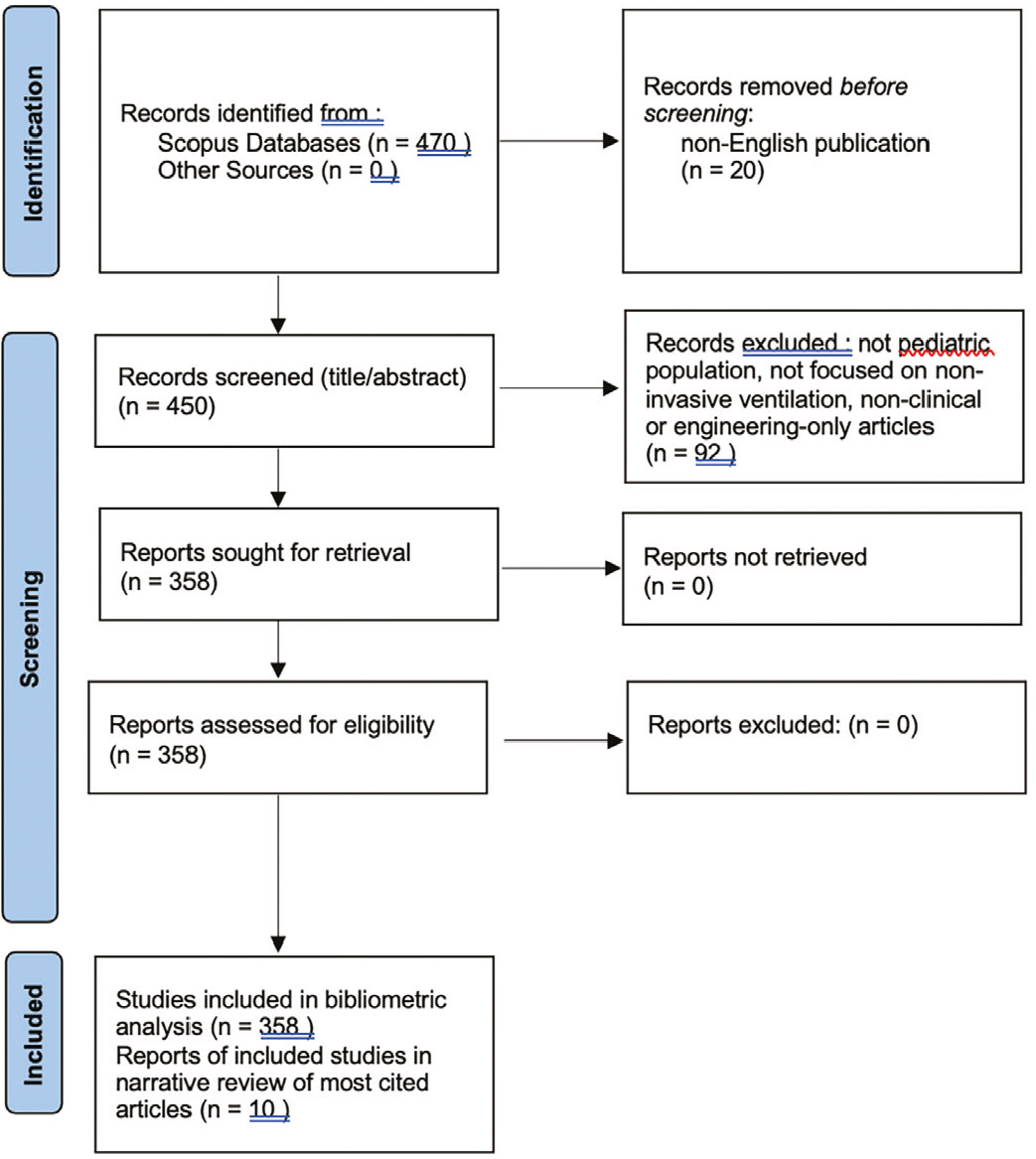
PRISMA: Preferred reporting items for systematic reviews and meta-analyses
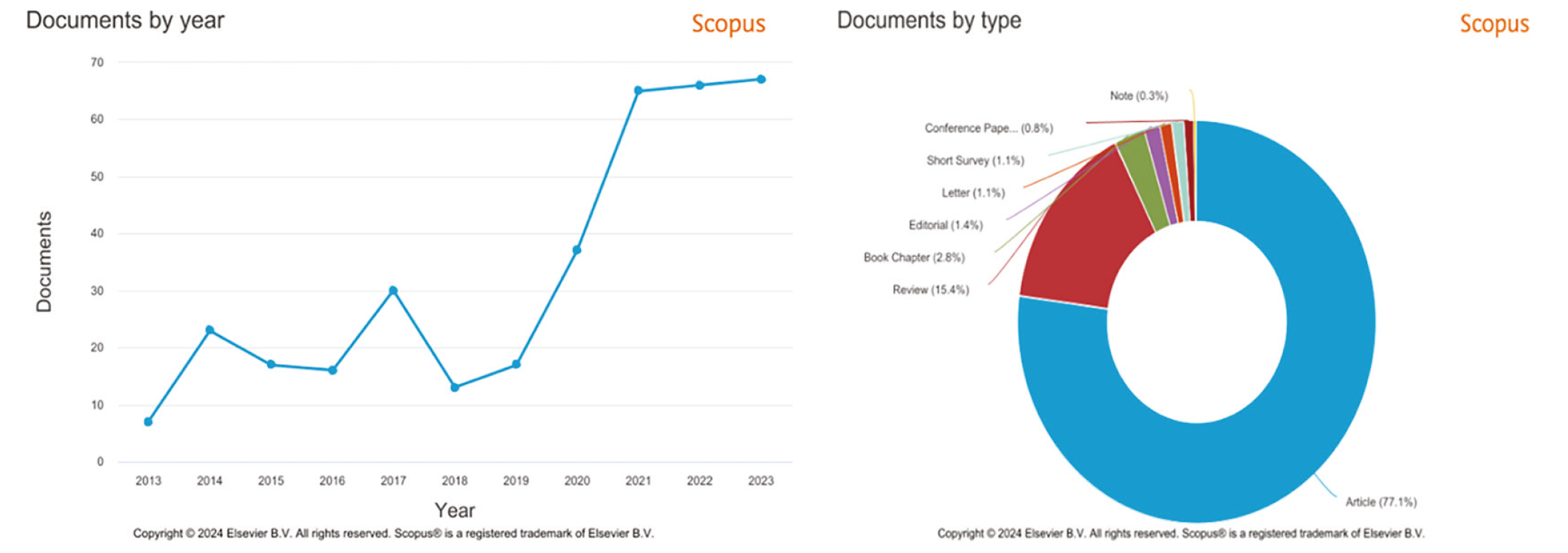
The countries with the highest number of publications are predominantly developed nations with better healthcare infrastructure and greater access to advanced technologies, led by the United States (124 articles), followed by Canada (43) and Spain (39) (). Among the 10 countries with the highest number of publications, only one-India- is from Asia. This indicates limited research from Asia and Southeast Asia, presenting an opportunity for further investigation of NIV in the region. The most productive author on NIV is Emeriaud G., with 17 articles; this is followed by Jouvet P. (12 articles) and Essouri S. (11 articles). Other productive authors include Rotta AT., Shein SL., Abu-Sultaneh S., Kneyber, MCJ., Conti G., Blackwood B., and Fauroux B. (). This can be an opportunity for these productive writers and researchers in various countries to collaborate, thereby expanding the scope of research in this field.
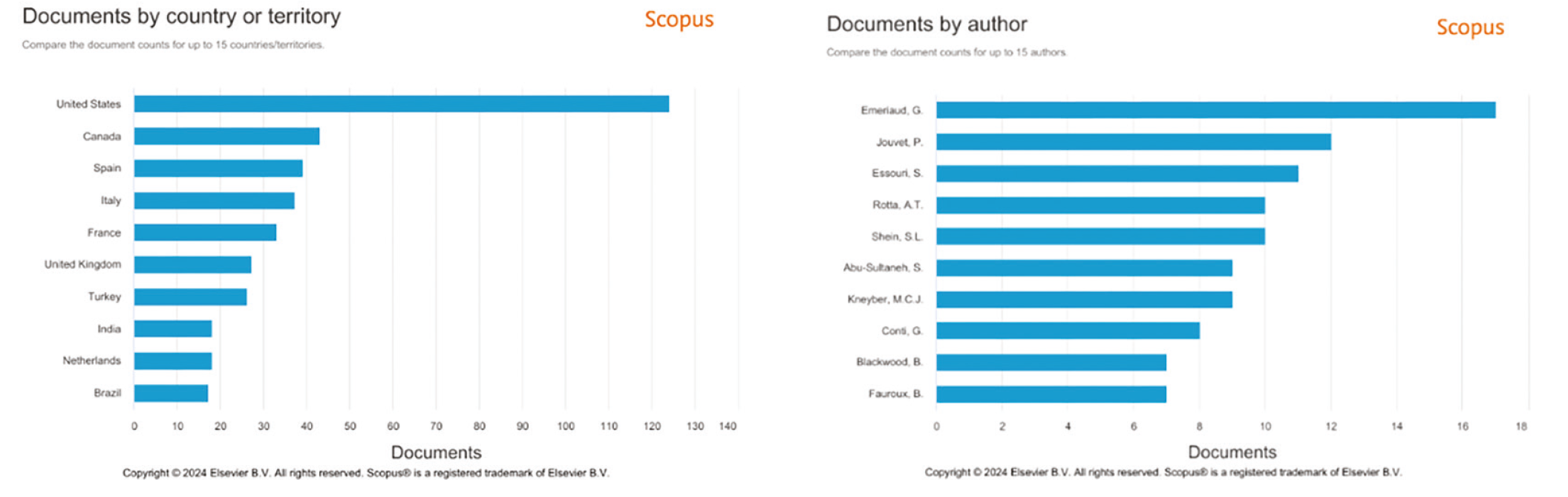
NIV: Non-invasive ventilation,
The ten most-cited articles are described in ; seven of the ten concern pediatric cases. The most-cited article is “acute respiratory distress syndrome (ARDS)” by Matthay et al. with 822 citations. Followed by “non-invasive versus invasive respiratory support in preterm infants at birth: systematic review and meta-analysis” by Schmölzer et al. with 417 citations, and “paediatric acute respiratory distress syndrome incidence and epidemiology (PARDIE): an international, observational study” by Khemani et al. with 248 citations.
Table 1. Ten most-cited articles
No | Title | Year | Source | Citation |
|---|---|---|---|---|
1 | Acute respiratory distress syndrome3 | 2019 | Nature Reviews Disease Primers | 822 |
2 | Non-invasive versus invasive respiratory support in preterm infants at birth: systematic review and meta-analysis4 | 2013 | BMJ (Online) | 417 |
3 | Paediatric acute respiratory distress syndrome incidence and epidemiology (PARDIE): an international, observational study5 | 2019 | The Lancet Respiratory Medicine | 248 |
4 | First and second waves of coronavirus disease-19: a comparative study in hospitalized patients in Reus, Spain6 | 2021 | PLoS ONE | 205 |
5 | Recommendation for mechanical ventilation of critically ill children from the paediatric mechanical ventilation consensus conference (PEMVECC)7 | 2017 | Intensive Care Medicine | 203 |
6 | European consensus guidelines on the management of respiratory distress syndrome: 2022 update8 | 2023 | Neonatology | 147 |
7 | Impact of rapid response system implementation on critical deterioration events in children9 | 2014 | JAMA Pediatrics | 133 |
8 | Pediatric long-term home mechanical ventilation: twenty years of follow-up from one Canadian center10 | 2014 | Pediatric Pulmonology | 124 |
9 | Severe and fatal forms of COVID-19 in children11 | 2020 | Archives de Pediatrie | 117 |
10 | Should early extubation be the goal for children after congenital cardiac surgery12 | 2014 | Journal of Thoracic and Cardiovascular Surgery | 100 |
COVID-19: Coronavirus disease-2019
Co-occurrence Cluster
Co-occurrence network analysis of author keywords identified four thematic groups, comprising a total of 28 keywords (). The densest keyword was NIV. The four research clusters were respiratory insufficiency, mechanical ventilation, continuous positive airway pressure (CPAP), and ARDS. The overlay visualization showed increasing interest in “extubation failure, CPAP, COVID-19, and mortality” (). The overlay visualization highlights emerging themes such as COVID-19 and mortality, as illustrated in . Most research on NIV using density visualization focuses on NIV, mechanical ventilation, children, pediatrics, COVID-19, and bronchiolitis (). This can be indicated by the bright yellow color. On the other hand, research on NIV is still limited in areas such as weaning, extubation, respiratory insufficiency, pediatric critical care, ARDS, and extubation failure, among others. Thus, addressing these items () opens opportunities for further research.
NIV in the paediatric population has a wide spectrum of applications, from the prevention and early management of respiratory distress in neonates and therapeutic bridging in paediatric ARDS to postoperative support and long-term home ventilation in children with neuromuscular diseases. The synthesis of ten collected journal publications describes the developmental trajectory of evidence and clinical practice from 2013 to 2023, highlighting benefits, limitations, and open research directions ().-
Table 2. Author keyword co-occurrence clusters
Cluster 1 (11 items) | Cluster 2 (7 items) | Cluster 3 (6 items) | Cluster 4 (4 items) |
|---|---|---|---|
Asthma | Airway extubation | Bronchiolitis | Acute respiratory distress syndrome |
Child | Extubation | Continious positive airway pressure | Acute respiratory failure |
Children | Extubation failure | High-flow nasal cannula | ARDS |
COVID-19 | Mechanical ventilation | Non-invasive ventilation | Pediatric intensive care |
Critical care | Pediatric | Pediatric intensive care | - |
Home mechanical ventilation | Respiratory failure | Pediatric intensive care | |
Intensive care | Weaning | ||
Mortality | - | ||
Non-invasive ventilation | |||
Pediatrics | |||
Respiratory insufficiency | |||
COVID-19: Coronavirus disease-2019, ARDS: Acute respiratory distress syndrome
Table 3. Summary of the most-cited articles related to non-invasive ventilation
No | Title | Subject | Methods | Results related to NIV |
|---|---|---|---|---|
1 | Acute respiratory distress syndrome | • ARDS patients, both adults and children, with mild ARDS and non-intubated patients with acute hypoxemic respiratory failure (often early-stage ARDS). • The PALICC criteria for pediatric ARDS (PARDS) also include oxygenation parameters for children using NIV. | • A comprehensive review discussing the epidemiology, pathogenesis, diagnosis, and management of ARDS. | • NIV may be beneficial for patients with mild ARDS, as it can avoid the risks associated with invasive mechanical ventilation, such as delirium, neuromuscular weakness, and ventilator-associated pneumonia. Although NIV can improve oxygenation, evidence of its benefit for long-term clinical outcomes is still limited, and its effectiveness is highly influenced by the type of interface (e.g., helmet or face mask). Conversely, the use of HFNO has been shown to be safer, better tolerated, and to reduce mortality in acute hypoxemic respiratory failure (early-stage ARDS) through the delivery of low PEEP and a slight increase in carbon dioxide elimination. |
2 | Non-invasive versus invasive respiratory support in preterm infants at birth: systematic review and meta-analysis | • The study subjects were 2.782 very preterm infants (born at a gestational age of less than 32 weeks) drawn from four RCTs that met the inclusion criteria. Of these, 1296 infants were in the nasal CPAP group and 1486 in the intubation group. | • This study is a systematic review and meta-analysis of RCTs comparing nasal CPAP initiated at birth with intubation in very preterm infants. Searches were conducted in PubMed, Embase, the Cochrane Central Register of Controlled Trials, and Pediatric Academic Society abstracts up to June 2013. | • A combined analysis showed that the use of nasal CPAP in the delivery room provided significant benefits on the composite outcome of death or BPD at a corrected gestational age of 36 weeks, with one additional infant surviving without BPD per 25 infants treated with CPAP compared with intubation. • Separately, there was a significant trend favoring CPAP in reducing the incidence of BPD, although no significant difference in mortality rates was found between the groups. Additionally, the CPAP group showed a significant reduction in the need for mechanical ventilation and surfactant administration. • For other secondary outcomes-including pneumothorax, grade III/IV intraventricular hemorrhage, necrotizing enterocolitis, patent ductus arteriosus, and retinopathy of prematurity-there were no significant differences compared with intubation. |
3 | Pediatric acute respiratory distress syndrome incidence and epidemiology (PARDIE): an international observational study | • Children with a new diagnosis of PARDS, whether using IMV or NIV. A total of 744 new cases of PARDS were identified; complete data were available for 708 patients. • Regarding NIV, 160 patients were initially diagnosed with PARDS-NIV. | • Observational study, cross-sectional, international prospective. • Conducted in 145 international PICUs (pediatric intensive care units) from 27 countries, during 10 weeks of study between May 2016 and June 2017. | • The mortality rate in PARDS patients treated with NIV ranges from 10-15%, which is comparable to that in mild-to-moderate PARDS. Approximately half of NIV patients eventually require intubation, with most intubations (86%) occurring within the first 48 hours after diagnosis. • Patients who fail NIV and are subsequently intubated have a higher mortality rate (25%), comparable to the mortality rate for moderate-to-severe PARDS with invasive mechanical ventilation. The degree of hypoxemia at diagnosis was found to be strongly associated with an increased risk of intubation and mortality. |
4 | First and second waves of coronavirus disease-19: a comparative study in hospitalized patients in Reus, Spain | • The study involved a total of 468 hospitalized patients with SARS-CoV-2 infection confirmed by RT-PCR. A total of 204 patients were in the first wave and 264 in the second wave. • Patients in the second wave tended to be younger, with an increased proportion of children, pregnant women, and postpartum women. | • A prospective comparative study of COVID-19 patients admitted to Hospital Universitari de Sant Joan (Reus, Spain) between March 15 and October 15, 2020, compared the first and second pandemic waves. • Patient inclusion was based on an analytically confirmed SARS-CoV-2 diagnosis and on the requirement for hospitalization. • Data analysis was performed retrospectively using medical records. | • During the second wave of the COVID-19 pandemic, use of non-invasive mechanical ventilation increased, likely influenced by the younger age profile of patients and improved healthcare system preparedness, thereby allowing management of less severe cases with NIV. |
5 | Recommendations for mechanical ventilation of critically ill children from the Paediatric Mechanical Ventilation Consensus Conference (PEMVECC) | • Critically ill children: the PEMVECC guidelines apply to critically ill children with various lung conditions (normal, obstructive, restrictive, mixed), chronically ventilated patients, cardiac patients, and pulmonary hypoplasia syndrome, aged less than 18 years. • Extremely preterm infants: 2782 extremely preterm infants (gestational age <32 weeks) who received CPAP or intubation. • Pediatric PARDS patients: 744 new cases of PARDS, of which 160 patients were initially diagnosed with PARDS and received NIV. • Adult COVID-19 patients: 468 adult patients hospitalized with confirmed COVID-19 from two pandemic waves. | • PEMVECC was initiated by the ESPNIC to develop recommendations on mechanical ventilation in critically ill children. The approach employs the RAND/UCLA appropriateness method, with electronic literature searches conducted in PubMed and EMBASE through September 1, 2015. Eligible studies are those involving individuals under 18 years of age and describing non-invasive or invasive respiratory support, excluding case series, special reports, and publications from the perinatal period. | • NIV should be considered before intubation in patients with obstructive or restrictive airway disease, mild-to-moderate PARDS, or cardiorespiratory failure, and it is increasingly used for acute respiratory failure, following congenital heart surgery, status asthmaticus, and in neuromuscular disorders. However, intubation should not be delayed if the indication is clear, as there is no definitive evidence on the optimal timing or method of its use. The choice of interface should minimize leakage and should be adapted to local conditions and experience. • Although HFNC and CPAP can reduce respiratory work, there is no evidence demonstrating superior outcomes compared with other interventions. Success evaluation should be performed early (approximately 1 hour after initiation) by monitoring vital parameters, the SpO2/FiO2 ratio, pH, level of consciousness, and organ function. • Evidence for routine NIV use post-extubation is still limited, but in neuromuscular patients, early application of NIV combined with cough assistance techniques can be considered to prevent extubation failure. |
6 | European Consensus Guidelines on the management of respiratory distress syndrome: 2022 update | • The research focus and recommendations concern premature infants, specifically the management of RDS in those with gestational ages over 24 weeks. The recommendations also apply to all infants at risk of RDS, such as those with a gestational age less than 30 weeks who do not require intubation for stabilization. | • This guideline is the sixth version of the “European Guidelines for the Management of RDS”. This document was compiled by a panel of European neonatologists and perinatal obstetricians based on the literature up to the end of 2022, and the strength of evidence was assessed using the GRADE system. | • NIV, especially CPAP, is recommended as the initial respiratory support for all infants at risk of RDS, and combining NIV with early surfactant administration via the LISA method is an optimal management strategy. The use of NIV has been shown to reduce the need for mechanical ventilation, the risk of re-ventilation, and mortality and the incidence of BPD, while increasing lung volume and reducing apnea and the work of breathing. • CPAP remains the primary choice, supported by strong evidence for more than five decades, while HFNC can be considered an alternative in selected cases if CPAP or NIPPV backup is available. The recommended interfaces are short binasal prongs or a mask, with an initial pressure of 6-8 cm H2O. • Intubation should be performed only when the infant does not respond to positive-pressure ventilation and should not be delayed when indicated. Additionally, routine caffeine administration to infants <32 weeks’ gestation is recommended to reduce the need for mechanical ventilation. |
7 | Impact of rapid response system implementation on critical deterioration events in children | • The research subjects consist of 1.810 unplanned transfers of pediatric patients from general wards to the pediatric and neonatal ICUs. | • This quasi-experimental study uses interrupted time series analysis. This study was conducted at a tertiary children’s hospital in the US to evaluate the implementation of the RRS, including the MET and the EWS, which started in February 2010. CD, defined as the need for non-invasive or invasive mechanical ventilation within 12 hours of transfer to the ICU, was the primary outcome. | • Implementing the RRS has been shown to significantly affect outcomes related to mechanical ventilation. After the implementation of RRS, incidents of critical deterioration decreased by 62%; this reduction included cases requiring non-invasive mechanical ventilation. Additionally, there was an 83% reduction in the use of mechanical ventilation-both invasive and non-invasive-within the first 12 hours after transfer to the ICU. • The implementation of RRS was also associated with longer intervals before the administration of vasopressors or the initiation of mechanical ventilation, reflecting improved clinical stabilization prior to the need for further therapy. |
8 | Pediatric long-term home mechanical ventilation: twenty years of follow-up from one Canadian center | • The study subjects were 379 children under 18 years of age who received LTMV. A total of 313 children (83%) used NIPPV, and 66 (17%) used invasive ventilation. The average age at the initiation of ventilation is 9.6 years, and 99% of children are treated at home. | • This study is a retrospective review of medical records conducted at a single center in Canada. The focus is on patients receiving LTMV at home between 1991 and 2011. LTMV is defined as the daily use of IMV or NIPPV for at least 3 months, at home or in a long-term care facility, and excludes use of CPAP alone. | • The use of long-term NIV in children increased exponentially, driven by a more than fivefold rise in NIPPV initiation during the study’s second decade. More than 80% of children in this program use NIV, making it the dominant modality, while the proportion of children receiving invasive ventilation is only 17%-the lowest reported globally. • Mortality among NIV users (11.2%) is significantly lower than that with invasive ventilation (30%), confirming its safety. Initiation of NIPPV, especially in children with neuromuscular disorders, has been shown to improve respiratory function and survival. Although NIV reduces individuals’ need for intensive care, the growing population of LTMV users still increases the burden on healthcare resources. |
9 | Severe and fatal forms of COVID-19 in children | • Pediatric patients admitted for confirmed or highly suspected COVID-19, aged 1 month to 18 years. | • Retrospective observational study, single-center. | • Out of the 27 children analyzed, 10 received non-invasive mechanical ventilation as supportive therapy. One fatal case involved a 17-year-old girl with epilepsy and a history of severe neonatal encephalopathy who received NIV rather than intubation, in accordance with a prior decision to withdraw care because of extremely severe comorbid conditions. |
10 | Should early extubation be the goal for children after congenital cardiac surgery? | • This study involved 613 children who underwent congenital heart surgery between July 2010 and December 2012. | • Observational retrospective analysis of all patients undergoing congenital heart surgery. | • Preoperative mechanical ventilation, including non-invasive support, has been shown to be a significant predictor of delayed extubation (>24 hours). Analysis shows that patients requiring ventilation before surgery have approximately 9.4-fold higher odds of delayed extubation than those who do not (OR=9.4, 95% CI: 3.2-28.2; p<0.001). In this study, only five patients received preoperative NIV. |
RDS: Respiratory distress syndrome, ARDS: Acute respiratory distress syndrome, PARDS: Pediatric acute respiratory distress syndrome, PALICC: Pediatric acute lung injury consensus conference, PEEP: Positive end-expiratory pressure, RCT: Randomized controlled trial, NIV: Non-invasive ventilation, CPAP: Continuous positive airway pressure, HFNO: High-flow nasal cannula, BPD: Bronchopulmonary dysplasia, IMV: Invasive mechanical ventilation, COVID-19: Coronavirus disease-2019, SARS-CoV-2: Severe acute respiratory syndrome-coronavirus-2, ESPNIC: European Society for Pediatric and Neonatal Intensive Care, RAND/UCLA: Research and development/University of California, Los Angeles, ICU: Intensive care unit, US: United States, RRS: Rapid response system, MET: Medical emergency team, EWS: Early warning score, CD: Critical deterioration, LTMV: Long-term mechanical ventilation, NIPPV: Non-invasive positive pressure ventilation, OR: Odds ratio, CI: Confidence interval, RT-PCR: Reverse transcription- polymerase chain reaction
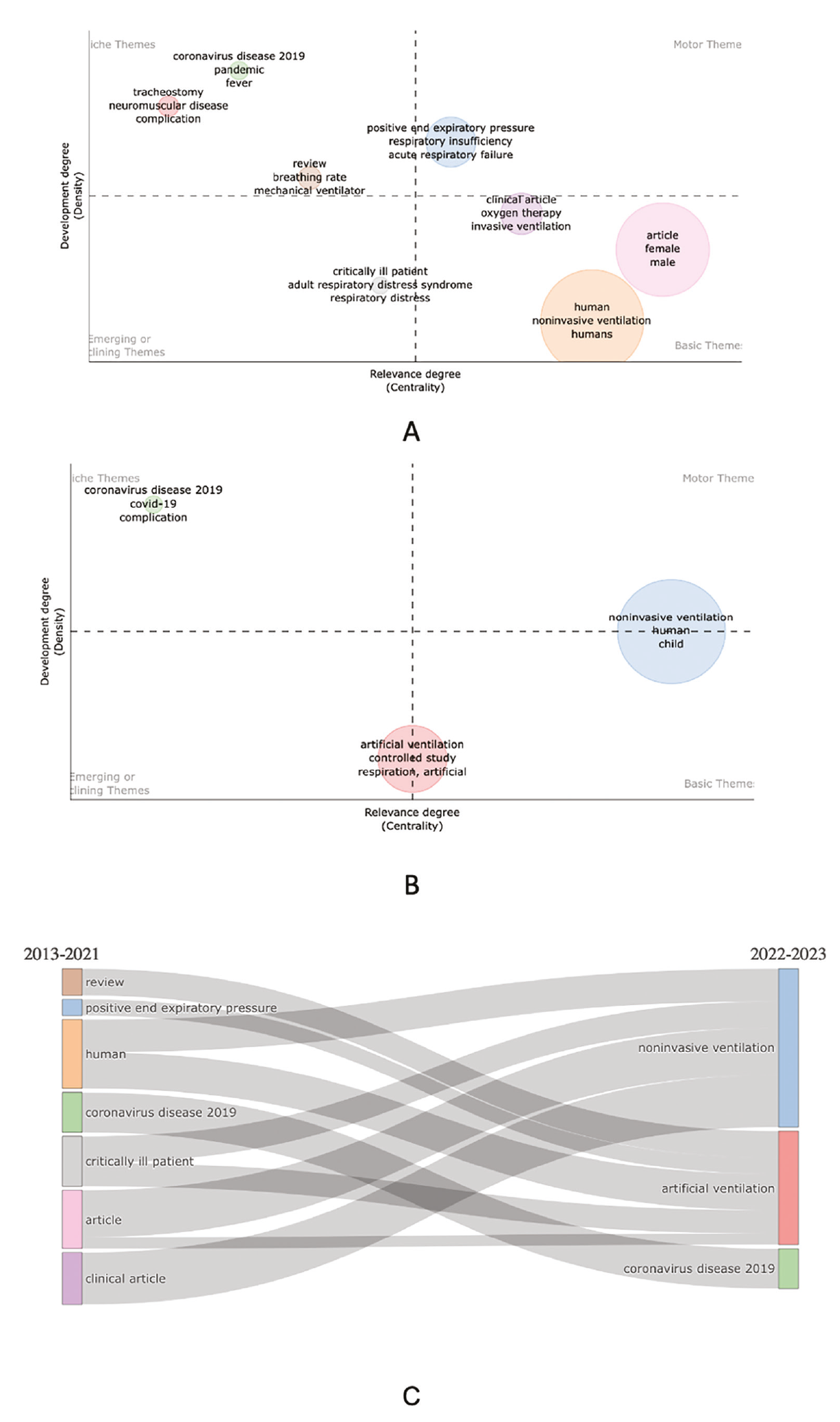
A new term that emerged in 2022-2023 is “artificial ventilation”. Artificial ventilation, or mechanical ventilation, is a term used for any method that mechanically assists or replaces spontaneous breathing. This includes invasive methods (such as intubation and mechanical ventilation) and non-invasive methods (such as NIV). The primary goal is to ensure adequate gas exchange and oxygenation in patients who cannot breathe effectively on their own. Artificial ventilation and NIV are used to manage respiratory failure but are indicated in different clinical scenarios. NIV is often preferred for patients with acute or chronic respiratory diseases or those with mild-to-moderate respiratory disorders because it is associated with fewer complications than invasive ventilation. Although artificial ventilation and NIV both aim to support patients with respiratory failure, they differ in their application, patient comfort, and potential complications.,
In neonates, particularly premature infants with RDS, recent evidence confirms that NIV, especially CPAP and non-invasive positive pressure ventilation (s)(NIPPV), is the recommended initial respiratory support from birth. The latest European guidelines indicate that (s)NIPPV is the most effective primary therapy, while HFNC can be considered for stable infants, provided that CPAP/NIPPV is available as a backup option in case of failure. Seven meta-analyses comparing early CPAP with intubation in very preterm infants showed reductions in the need for mechanical ventilation and surfactant use, and an improvement in the combined outcome of mortality and bronchopulmonary dysplasia. From a bibliometric perspective, the topic of early CPAP and NIPPV for preterm RDS has become one of the main clusters, exhibiting a high publication rate and supported by strong evidence demonstrating significant clinical benefits, including reduced need for intubation and lower risk of long-term respiratory complications.,
In children with PARDS, the international PARDIE cohort study [27 countries; 145 pediatric intensive care unit (PICUs)] confirmed that both diagnosis and severity of PARDS can be determined using the PaO2/FiO2 and SpO2/FiO2 (PF/SF) ratio, even when the patient has not yet been intubated., Degrees of hypoxemia have been shown to correlate with poor outcomes, and metrics such as ventilator-free days are now consistently used to compare outcomes for both NIV and IMV. In cases of early hypoxemic respiratory failure, evidence in the adult population suggests that high-flow nasal cannula (HFNC) reduces intubation rates and mortality compared with conventional oxygen; this finding has potential implications for pediatric patients with similar conditions.,
The key successful NIV in mild-to-moderate PARDS is thorough initial assessment, the selection of the appropriate modality (CPAP/NIPPV versus HFNC), and rigorous monitoring of oxygenation indicators (PF/SF).3.15 The paediatric mechanical ventilation consensus conference (PEMVECC) (2017) recommendations suggest considering NIV for patients with obstructive and restrictive diseases, mild-to-moderate PARDS, cardiorespiratory failure, post-cardiac surgery, asthma, and neuromuscular disorders, with strict evaluation within the first hour to assess success. NIV should not delay intubation if failure criteria are met; selecting an interface that minimizes leakage is crucial., In a cohort of patients undergoing congenital heart surgery, the need for preoperative ventilation, including NIV, was shown to correlate with delayed postoperative extubation. This indicates that NIV is not only a respiratory support tool but also a clinical marker of disease severity relevant to anesthesia planning and ICU management.,
The long-term use of mechanical ventilation in children continues to increase significantly, as evidenced by Canadian data (1991-2011), which recorded that 83% of patients were using NIPPV, primarily children with neuromuscular diseases, most of whom were treated at home. Studies in Spain during the COVID-19 pandemic also showed a shift toward younger populations, with increased use of NIV and a decrease in the need for invasive ventilation, length of stay, and mortality. Nevertheless, the cases of adolescents with severe multisystem disease confirm the limitations of NIV effectiveness when complex comorbidities are present., , Implementing a rapid response system in a tertiary children’s hospital has been shown to reduce the incidence of critical deterioration by 62%, which demonstrates that early detection and rapid intervention play an important role in preventing severe respiratory failure., Overall, evidence from the past decade confirms NIV as an effective strategy for preventing intubation in selected cases, such as neonatal RDS, mild-to-moderate PARDS, obstructive and neuromuscular diseases, provided that an initial assessment is performed, oxygenation indicators (PF/SF) are monitored, and a quick decision is made for intubation if NIV fails.,
A bibliometric analysis shows that research on NIV in children is dominated by four clusters: mechanical ventilation, critical care, CPAP/bronchiolitis, and ARDS/extubation failure. The keywords “NIV” and “mechanical ventilation” serve as network hubs, indicating their position as core themes connecting various fields such as neonatology, intensive care, and acute respiratory failure. Between 2013 and 2023, research focus shifted from the application of CPAP/NIPPV in neonates to advanced clinical issues such as weaning, extubation failure, COVID-19, and mortality. There appears to be an increase in the number of new topics after 2019, indicating that the pandemic influenced the expansion of the scope of NIV in children. Overall, this bibliometric analysis indicates that research on NIV is becoming increasingly multidisciplinary, evolving from technical aspects toward the assessment of clinical outcomes and patient safety, and facilitating cross-sectoral research collaborations, particularly in the fields of pediatric critical care and extubation outcomes.
Conclusion
A comprehensive review of non-invasive mechanical ventilation in children has been conducted. Research on non-invasive mechanical ventilation experienced fluctuations from 2013 to 2018, and then increased from 2019 to 2023. Rapidly growing numbers of publications originate from the United States, Canada, and Spain, while contributions from Southeast Asia remain limited. Future research is expected to focus on several important topics such as weaning, extubation outcomes, and pediatric critical care. External clinical evaluation and patient safety are also important topics that require further study to strengthen clinical practice and evidence-based policies.
Footnotes
Authorship Contributions
Surgical and Medical Practises: S.M., A.G.M., H.F., S.D.J., Concept: S.M., A.G.M., Design: S.M., A.G.M., Data Collection or Processing: A.G.M., Analysis or Interpretation: S.M., H.F., Literature Search: H.F., S.D.J., Writing: S.M., A.G.M., H.F., S.D.J.
Conflict of Interest: No conflict of interest was declared by the authors.
Financial Disclosure: The authors declared that this study received no financial support.
References
Popat B, Jones AT. Invasive and non-invasive mechanical ventilation. Medicine (Abingdon). 2016;44:346-50.
Cammarota G, Simonte R, De Robertis E. Comfort during non-invasive ventilation. Front Med (Lausanne). 2022;9:874250.
Matthay MA, Zemans RL, Zimmerman GA, Arabi YM, Beitler JR, et al. Acute respiratory distress syndrome. Nat Rev Dis Primers. 2019;5:18.
Schmölzer GM, Kumar M, Pichler G, Aziz K, O’Reilly M, et al. Non-invasive versus invasive respiratory support in preterm infants at birth: systematic review and meta-analysis. BMJ. 2013;347:f5980.
Khemani RG, Smith L, Lopez-Fernandez YM, Kwok J, Morzov R, et al. Paediatric acute respiratory distress syndrome incidence and epidemiology (PARDIE): an international, observational study. Lancet Respir Med. 2019;7:115-28.
Iftimie S, López-Azcona AF, Vallverdú I, Hernández-Flix S, de Febrer G, et al. First and second waves of coronavirus disease-19: a comparative study in hospitalized patients in Reus, Spain. PLoS One. 2021;16:e0248029.
Kneyber MCJ, de Luca D, Calderini E, Jarreau PH, Javouhey E, et al. Recommendations for mechanical ventilation of critically ill children from the paediatric mechanical ventilation consensus conference (PEMVECC). Intensive Care Med. 2017;43:1764-80.
Sweet DG, Carnielli VP, Greisen G, Hallman M, Klebermass-Schrehof K, et al. European consensus guidelines on the management of respiratory distress syndrome: 2022 update. Neonatology. 2023;120:3-23.
Bonafide CP, Localio AR, Roberts KE, Nadkarni VM, Weirich CM, et al. Impact of rapid response system implementation on critical deterioration events in children. JAMA Pediatr. 2014;168:25-33.
Amin R, Sayal P, Syed F, Chaves A, Moraes TJ, et al. Pediatric long-term home mechanical ventilation: twenty years of follow-up from one Canadian center. Pediatr Pulmonol. 2014;49:816-24.
Oualha M, Bendavid M, Berteloot L, Corsia A, Lesage F, et al. Severe and fatal forms of COVID-19 in children. Arch Pediatr. 2020;27:235-8.
Harris KC, Holowachuk S, Pitfield S, Sanatani S, Froese N, et al. Should early extubation be the goal for children after congenital cardiac surgery? J Thorac Cardiovasc Surg. 2014;148:2642-7.
Pierro M, Villamor-Martinez E, van Westering-Kroon E, Alvarez-Fuente M, Abman SH, et al. Association of the dysfunctional placentation endotype of prematurity with bronchopulmonary dysplasia: a systematic review, meta-analysis and meta-regression. Thorax. 2022;77:268-75.
Saito K, Nishimura E, Ota E, Namba F, Swa T, et al. Antenatal corticosteroids in specific groups at risk of preterm birth: a systematic review. BMJ Open. 2023;13:e065070.
Celik NB, Tanyildiz M, Yetimakman F, Kesici S, Bayrakci B. Comparison of high flow oxygen therapy versus non-invasive mechanical ventilation for successful weaning from invasive ventilation in children: an observational study. Medicine (Baltimore). 2022;101:e30889.
Halimić M, Dinarević SM, Begić Z, Kadić A, Pandur S, et al. Early extubation after congenital heart surgery. Journal of Health Sciences. 2014;4:156-61.
Amin R, Sayal A, Syed F, Daniels C, Hoffman A, et al. How long does it take to initiate a child on long-term invasive ventilation? Results from a Canadian pediatric home ventilation program. Can Respir J. 2015;22:103-8.
Roberts KE, Bonafide CP, Paine CW, Paciotti B, Tibbetts KM, et al. Barriers to calling for urgent assistance despite a comprehensive pediatric rapid response system. Am J Crit Care. 2014;23:223-9.
Wong JJ, Phan HP, Phumeetham S, Ong JSM, Chor YK, et al. Risk stratification in pediatric acute respiratory distress syndrome: a multicenter observational study. Crit Care Med. 2017;45:1820-8.